
Femur first is the standard order for cosmetic patients pursuing both. Most high-volume surgeons start with the thigh bone for three reasons: the femur tolerates more length in one stage (typical 6–8 cm vs 5–7 cm in the tibia), the femur recovers faster despite being the larger bone, and the proportional change from a longer thigh is the visual outcome most cosmetic patients are actually paying for. The tibia goes second 12–18 months later if the patient still wants more height. A small minority of patients are tibia-first cases, almost always because of a specific anatomical or aesthetic reason a surgeon identified during imaging.
Why femur first is the default answer
Ask a high-volume surgeon at the Paley Institute, HSS, Rubin Institute, Wanna Be Taller or AFA which bone they prefer to lengthen first, and the answer is the same: the femur. The default exists for three converging reasons.
The femur tolerates more length in one stage. Six to eight centimetres is comfortable; eight to ten is achievable in experienced hands with careful patient selection. The tibia caps lower — five to seven centimetres typical, eight only in exceptional cases. The difference is bone geometry and soft-tissue envelope: the femur has more medullary canal volume for an internal nail, more surrounding muscle mass to stretch with the bone, and a more forgiving neurovascular bundle.
The femur recovers faster despite being the larger bone. Counter-intuitive but consistent in published series. The thigh has thicker muscle and fat cover, richer blood supply to the periosteum, and fewer critical neurovascular structures directly adjacent to the distraction site. The tibia, by contrast, has thin anterior soft-tissue cover (which is why a shin bruise hurts more than a thigh bruise), and the anterior tibial artery and the common peroneal nerve sit closer to the cortex.
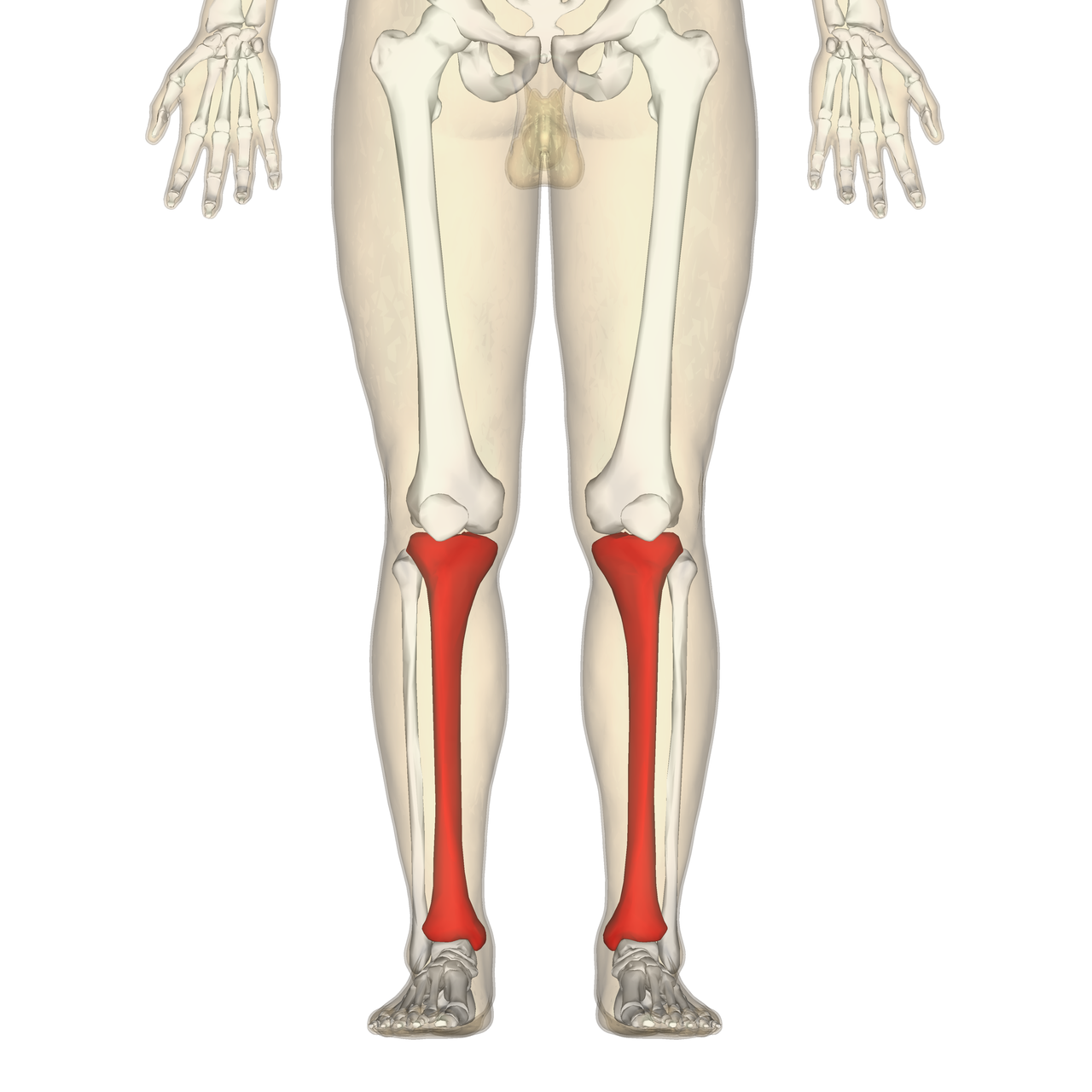
The proportional change patients want is mostly a thigh change. Lengthening the femur extends the upper leg, which dominates the visual impression in clothed photographs. Lengthening the tibia extends the lower leg. The standard cosmetic patient who wants to add 5–8 cm to their height finds the femur-only result satisfies their goal — which is why many two-stage patients never come back for the tibia.
What the femur is actually doing in those 9–14 months

Surgery happens on day zero. The surgeon performs a controlled osteotomy on the proximal third of the femoral shaft, inserts the lengthening device (PRECICE 2 internal nail, LON internal nail plus external fixator, or pure Ilizarov), and closes. Two days inpatient, then home on crutches.
Distraction begins on day 5–7 — the latency phase allowing soft callus to start forming at the cut ends. The patient extends the bone by approximately 0.75–1 mm per day, split across three or four short sessions to allow tissue to adapt. Distraction lasts 60–80 days for a 6–8 cm gain.
Consolidation runs from the end of distraction through month 9–12 post-op. The new bone column hardens from soft callus to lamellar bone. Partial weight-bearing returns at 6–10 weeks; full weight-bearing without crutches at 4–5 months for internal-nail methods, 6–8 months for hybrid LON, 8–12 months for pure Ilizarov.
Implant removal happens at 12–18 months for internal-nail methods. Short second surgery, day-case in most centres, a missed piece of many patients' original budget. After removal the patient is structurally finished with the femur — they can run, lift, and resume impact sports at their pre-surgery level. From here, the tibia is optional.
Side-by-side: femur vs tibia for cosmetic patients
The numbers below come from published case series (JBJS, JOSR), pooled cosmetic-LL outcomes from US and European centres, and clinic-reported data from the directory.
| Attribute | Femur | Tibia |
|---|---|---|
| Typical single-stage gain | 6–8 cm | 5–7 cm |
| Maximum in expert hands | 8–10 cm | 7–8 cm |
| Distraction phase length | 60–80 days | 50–70 days |
| Full recovery | 9–14 months | 12–18 months |
| Full weight-bearing (PRECICE) | 4–5 months | 5–7 months |
| Nerve injury risk | Lower (sciatic well-protected) | Higher (peroneal nerve close to cortex) |
| Pin-site infection (LON/Ilizarov) | 5–15% | 15–30% |
When a surgeon picks tibia first
A minority of cosmetic patients are tibia-first cases. Two scenarios drive the inversion.
The patient already has a measurable length discrepancy with a longer thigh and a shorter calf. Most adults have minor segmental discrepancies between sides; some have them between the femur and the tibia of the same leg. If imaging shows the patient is proportionally short in the tibia relative to their femur, lengthening the tibia first restores symmetry rather than exaggerating an asymmetry. This is the most common reason for tibia-first.
The patient's aesthetic priority is calf shape, not thigh length. A subset of patients — typically those motivated by photographs of athletes or models with long lower legs — explicitly want the calf-elongation effect that femur lengthening cannot produce. Honest surgeons disclose that this preference comes with a longer overall recovery and higher complication risk per centimetre gained. It is a valid choice, not a wrong one.
Outside cosmetic indications, tibia-first is common for reconstructive cases — particularly congenital tibial bowing (Blount disease, pseudoarthrosis), post-traumatic tibial shortening, or pediatric length-discrepancy correction. These are not the patients this article is for, but the same anatomical reasoning applies.
Why the tibia is harder, in one paragraph
Three anatomical facts make the tibia a harder bone to lengthen than the femur. First, the anterior tibial cortex sits directly under thin skin and fat — no thick muscle envelope to absorb the soft-tissue stretch, which is why patients describe more sharp pain during tibial distraction. Second, the common peroneal nerve wraps around the fibular head just below the knee — nerve traction injury is the single most-reported tibial complication, occurring in 5–10% of pooled cases. Third, the pin sites in LON and Ilizarov protocols infect more often in the tibia than the femur because the thin skin provides poor barrier function. Pin-site infection in the tibia runs 15–30%, vs 5–15% in the femur in equivalent protocols. None of these facts is a reason to avoid tibia lengthening — they are reasons to expect a different recovery profile and to insist on a high-volume surgeon.
The 12–18 month interval between stages
Patients who want both bones lengthened do them in two stages, almost always 12–18 months apart. The interval is not arbitrary — it is set by bone biology. The lengthened femur must reach full consolidation (the new bone column hardened to lamellar bone), the patient must have completed implant removal, and the patient must have returned to a stable functional baseline before the body is asked to repeat the entire distraction-osteogenesis cycle on a different bone.
Shorter intervals (under 12 months) raise refracture risk on the femur side because the patient is loading impact stress before the new bone has fully matured. Longer intervals (over 24 months) are clinically fine — there is no upper bound — but most patients do not want to extend the full LL journey beyond two years.
At 12–18 months between stages, the total cosmetic-LL journey runs about 2–3 years from first surgery to final return to full activity after the second bone. Most patients in published two-stage series end up at 7–8 cm total femur gain plus 5–6 cm total tibia gain — a real-world ceiling of roughly 12–14 cm (5–5.5 inches) for the patient willing to commit to the full journey.
Most cosmetic LL patients stop after the femur because they're already at their target height — and the second surgery looks scarier from the inside than from the outside.
Doing both at the same time — and why most surgeons say no
Lengthening both the femur and the tibia in a single surgery is possible. The LON method allows it because the hardware is relatively simple and the cost addition is modest. A handful of high-volume Turkish surgeons — most famously Dr. Yüksel Yurttaş and Dr. Halil Buldu (LiveLifeTaller) — perform combined femur-and-tibia LON for patients who want 10–14 cm in one go.
The trade-off is real, and patients should understand it before booking. Complication risk is additive: if a single bone carries 25–35% all-complication rate in LON, doing both at once approaches 50–60%. Recovery is harder because the patient cannot offload weight onto an unaffected leg during distraction — both legs are healing simultaneously. Total time off feet runs 12–14 weeks for combined surgery, vs 6–8 weeks if the two stages are done separately.
Most surgeons outside Turkey decline to do combined femur-tibia in a single anaesthesia because the risk profile is not justified by the time savings. The clinical consensus, including at the Paley Institute, HSS and Rubin Institute, is to stage the two surgeries 12–18 months apart. The Turkish exception exists because the cost advantage of combining (one anaesthesia, one hospital stay, one travel trip from international patients) is large enough to outweigh the additional risk for a subset of patients.
Combined femur-and-tibia in one anaesthesia is a Turkish specialty. Outside Turkey, the standard is two stages, twelve to eighteen months apart.
Should I do both? A decision framework
Three factors drive the should-I-do-both decision. Read them in order.
What is your height target? Patients targeting under 8 cm total gain should stop after the femur. They will reach their target with one bone, one recovery, one cost. Patients targeting 10+ cm total need both bones — the femur cannot reliably give 10 cm in one stage, and the longer gain compromises proportions if delivered through one bone alone.
How old are you? Patients under 30 heal faster and tolerate the second stage better. Patients over 40 should think harder about whether the second stage is worth the extra year of recovery. Patients over 50 face genuinely diminishing returns — bone healing slows, complication rates rise, the second stage delivers less for more risk.
What is your risk tolerance? Doing one bone caps your complication risk at ~25% (cosmetic LL all-cause). Doing both doubles your exposure even when staged correctly. If the idea of a 50% combined complication probability makes you uncomfortable, plan for the femur only and re-evaluate at the 24-month mark whether the second stage still makes sense.
For most cosmetic patients we see, the right answer is femur-first, see how the result actually looks at 18 months, then decide. See our [how-tall-can-you-get guide](/blog/how-much-taller-limb-lengthening) for the realistic single-stage and two-stage ceilings.

- ·Femur first is the standard order — bigger gain in one stage (6–8 cm), faster recovery, lower nerve-injury risk, better aesthetic proportions.
- ·Tibia first is correct only for patients with a measurable length discrepancy favouring the thigh, or whose aesthetic priority is calf shape.
- ·Tibia lengthening runs slower (12–18 months full recovery vs 9–14 for femur), higher pin-site infection rate, and more nerve-injury risk.
- ·Standard two-stage interval is 12–18 months between bones — set by bone-healing biology, not arbitrary.
- ·Doing both bones in one anaesthesia is a Turkish LON specialty. Complication risk is additive (approaching 50–60% combined). Most non-Turkish centres decline.
- ·Realistic two-stage ceiling: ~12–14 cm total (femur + tibia). Most cosmetic patients stop after the femur because they hit their target.
Quick answers
Why do most surgeons start with the femur?+
Three reasons: the femur tolerates more length in one stage (6–8 cm vs 5–7 cm for the tibia), recovers faster despite being the larger bone, and gives the proportional change most cosmetic patients are paying for.
How long between femur and tibia surgeries?+
Standard is 12–18 months. The interval is set by bone biology — the femur must reach full consolidation and the patient must complete implant removal before starting the tibia. Shorter intervals raise refracture risk on the already-lengthened femur.
Is tibia lengthening more painful than femur?+
Yes, in most published patient reports. The tibia has thin anterior soft-tissue cover, so the soft-tissue stretch is felt more sharply. Pin-site infections also run 15–30% in tibial LON/Ilizarov vs 5–15% in the femur.
Can I do both bones at the same time?+
Possible with LON in Turkey (Yurttaş, Buldu, others). Outside Turkey most surgeons decline because complication risk is additive — approaching 50–60% combined vs ~25–35% per single bone. Total time off feet runs 12–14 weeks for combined surgery.
What is the realistic maximum I can gain in two stages?+
About 12–14 cm total in published series (7–8 cm femur + 5–6 cm tibia). Claims above 14 cm are exceptional cases and almost always involve a third stage or push the soft-tissue envelope beyond standard limits.
Why do many cosmetic patients stop after the femur?+
Because femur-only delivers 6–8 cm — already at most patients' target height. Many patients also describe a different attitude toward the second surgery after living through the first: the recovery is shorter than expected from the outside but longer than expected from the inside.
Sources
- 1.Black et al., JOSR — Femoral lengthening outcomes (pooled series) — Femur recovery timelines and complication rates.
- 2.Hammouda et al., JBJS — Tibial lengthening with PRECICE nail — Tibia-specific outcomes and timeline.
- 3.Paley DO — Principles of Deformity Correction (Springer) — Reference textbook on femur and tibia lengthening planning.
- 4.Khakharia et al. — LON outcomes by bone segment — Hybrid LON outcomes for femur and tibia.
- 5.Rozbruch & Ilizarov (eds.) — Limb Lengthening and Reconstruction Surgery — Reference text covering both femur and tibia protocols.
- 6.Paley Institute — Stature Lengthening protocols — Two-stage cosmetic-LL pathway and interval guidance.
- 7.Hospital for Special Surgery — Limb Lengthening Service — Academic centre protocols for staged femur-then-tibia.
- 8.Wanna Be Taller — Dr. Yunus Öç (combined femur-tibia case reports) — Turkish high-volume centre offering combined-stage LON.
Get matched with a verified clinic.
Our editor reviews your inquiry and introduces you to 2–3 clinics that fit your budget and goals. First clinic consult is usually free. We never sell your data.
Get matched — free →